

Water and septic
Well water and septic: what to prove before the deal goes firm
In the city, water and sewage are the municipality’s problem. At most cottages they are yours, and the standard agreement of purchase and sale says almost nothing about them.
The well
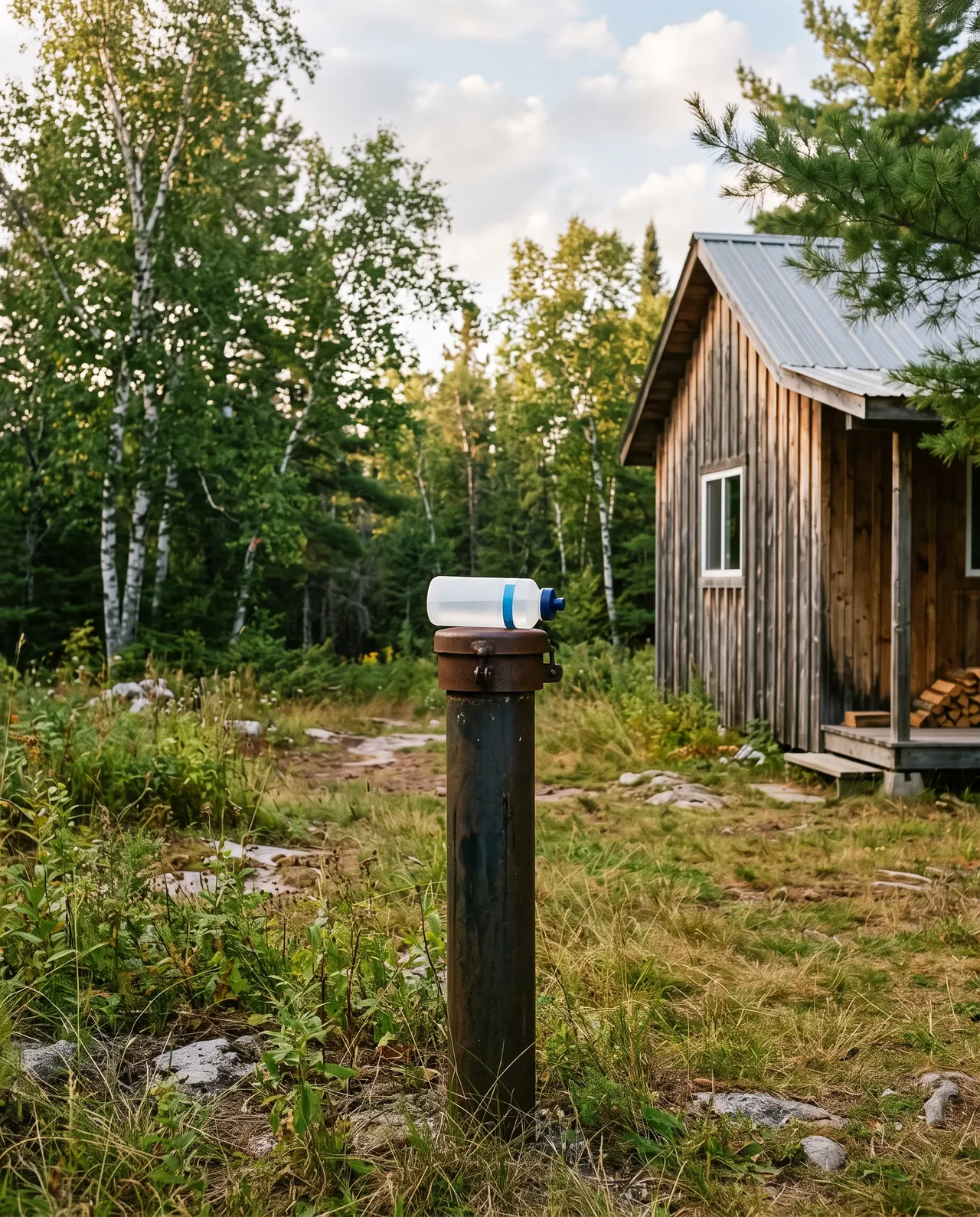
Ask whether the well is drilled or dug, or whether the cottage draws water from the lake, and whether there is any treatment (UV, filters, a softener). Ontario records most wells: contractors file a well record when they build or alter one, and the province’s well records map lets you search by address or lot and concession. A record gives the depth, the casing and the flow when it was drilled. Old dug wells and lake intakes often have none.
Bacteriological testing of a private well, cistern or treated lake water is free through Public Health Ontario, as of 2026. You collect the sample in a bottle from a PHO lab, the local health unit or a pickup point, and it has to be tested within 48 hours. The test covers total coliforms and E. coli only. For minerals or chemicals, such as uranium, arsenic or sodium, you need a private licensed laboratory. A potability condition should give you time for at least one test, preferably two taken a few days apart, and say who takes the samples. Many lenders and insurers will ask for the result too.
The septic system
On-site sewage systems are regulated under Part 8 of the Ontario Building Code. A permit is needed to install, replace or repair one, and the permit is issued by the municipality or by the body it has delegated septic work to, which in cottage country can be the township itself, a conservation authority or a health unit. Ask the seller for the permit and the record of its final inspection, the system’s location sketch, and pump-out receipts. Then ask the permitting office what it has on file: no record often means a system older than the file, or one that was never permitted.
Size matters as much as age. A system approved for a two-bedroom cottage may not legally support the four-bedroom year-round house it has become, and a buyer planning to rebuild or add bedrooms will usually need a new system. Some municipalities run septic re-inspection programs, and inspections are mandatory under the Building Code for systems in vulnerable drinking-water source areas; the local results are often on file with the municipality. Our region pages set out who handles septic where.
Conditions to put in the offer
- Water potability and quantity, satisfactory to the buyer, at the buyer’s cost.
- A septic inspection by a qualified inspector, including pumping the tank to see its condition.
- A seller’s warranty that, to the seller’s knowledge, the well and septic system have no known defects and were installed with the permits required, with copies of what the seller has.
The shoreline
Shore road allowances, docks and boathouses
The most common surprise in a waterfront deal: the strip of land between the cottage and the lake isn’t part of the property you are buying.
Shore road allowances
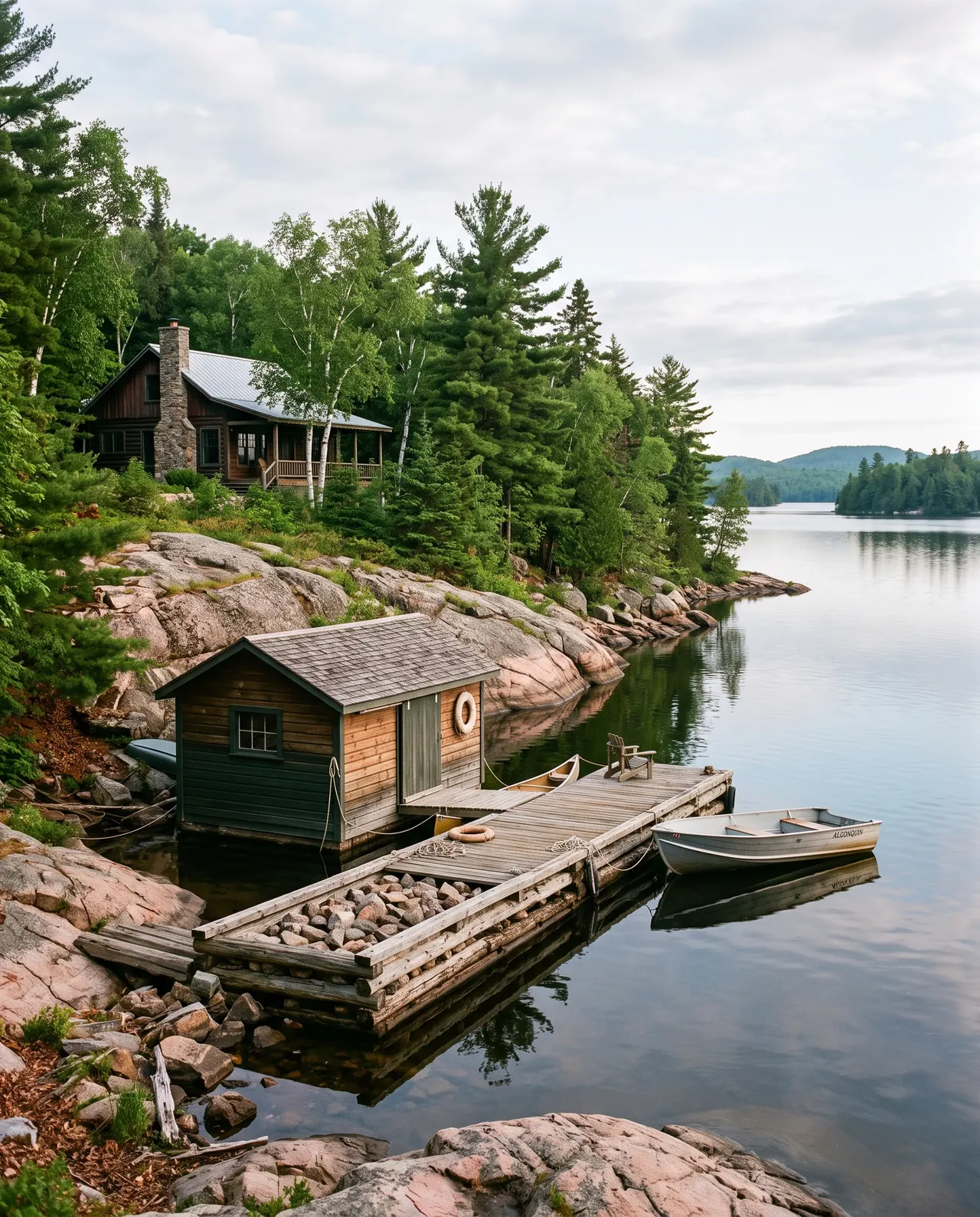
When much of Ontario was first surveyed, the Crown reserved a strip of land along many lakes and rivers for a road that was rarely built, often one chain (66 feet) wide. Where it was never closed, that original shore road allowance is still a public highway owned by the municipality under the Municipal Act, 2001. In practice it can mean that your dock, deck, sauna or even part of the cottage sits on municipal land, and that the public has a right to walk along your shore.
A buyer finds out from the title search, the legal description and the survey. Land that included a closed allowance usually shows a registered closing by-law and a transfer from the municipality. If the allowance is still open, most lakefront municipalities will close it and sell it to the abutting owner under their own policy, after public notice; the province describes the process on its municipal road allowances page. The buyer of the allowance generally pays for the survey, the legal work, the advertising and a price per square foot or metre, and council can refuse, for example where the strip gives public access to the water or another owner’s only road access. It can take a year or more. If the seller has already applied, the agreement should say who finishes the application and who pays.
Docks and boathouses
Where the lakebed is Crown land, the province can require a work permit for structures in physical contact with more than 15 square metres of shore lands; a floating dock is not counted as touching them. A boathouse or crib dock may also need a municipal building permit, and work in an area regulated by a conservation authority needs its permit too. On the Trent-Severn Waterway, Parks Canada owns the bed of the waterway and requires an in-water and shoreline works permit for docks, boathouses, boatlifts and shoreline work, including seasonal docks and repairs.
A seller who cannot produce permits for a large boathouse or a dock built on Crown or federal lakebed is passing that question to you. Ask for the permits before waiving conditions, and have the survey show where the structures sit in relation to the property line and the shore road allowance.
Why Wannes Law
A Toronto law firm that keeps you informed
-
A licensed Ontario lawyer
Rosalie Wannes, licensed by the Law Society of Ontario, is responsible for your file from start to finish.
-
Fees before you commit
Instant online quotes and published flat fees, so you know the cost before you retain us.
-
Every step explained
Plain-language explanations of what happens, what you provide and what we handle, at every stage.
-
Direct access
Reach your lawyer and law clerk directly by phone and email while your matter is underway.
-
Sign in person or remotely
Meet at our Sheppard Ave E office in Toronto, or review documents by video and courier the originals.
-
English, Armenian and Arabic
Talk through your matter in the language you are most comfortable with.
Access and title
The road in, water access and what the title shows
Many cottages are reached over a road nobody in particular owns, or only by boat. Before you buy, confirm that you have a legal right to get there, not just a habit everyone has respected.
Private and seasonal roads
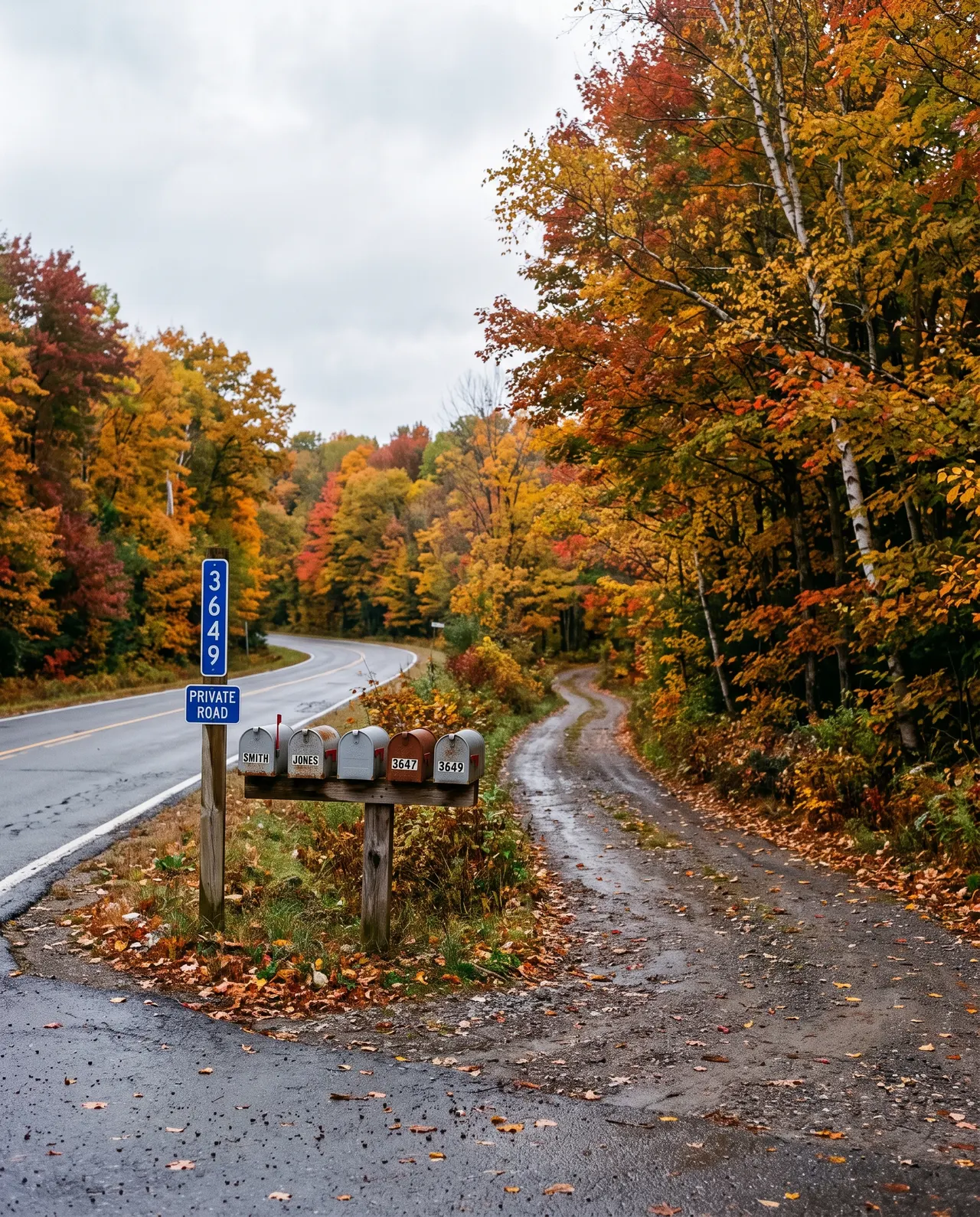
A municipal road may be maintained year-round or only seasonally; ask the township which applies, because it affects winter use, emergency access, building permits and some lenders. Many cottage roads are private: they cross neighbours’ land under registered rights-of-way, or under nothing on title at all. We check whether the right-of-way is registered and runs all the way from the public road to your lot, and whether there is a road association or a road maintenance agreement setting out who pays for grading and ploughing. Where there is none, the agreement of purchase and sale should not simply assume access. Ontario’s Road Access Act stops a landowner from blocking an access road that is the only road access to other land or its boat docking facilities, subject to exceptions, but it is a protection against closure, not a registered right of your own.
Water access and islands
For a water-access or island property, the question is what is on the mainland: a deeded parking spot and dock, a right-of-way over a neighbour’s landing, a marina rental, or a licence that ends when the marina is sold. Each gives you a very different right, and the agreement should name it. Expect lenders and insurers to treat water-access properties differently from those you can drive to.
Title and survey
Cottage lots often rest on old descriptions and surveys from decades ago, if there is a survey at all. Most Ontario land is now in the Land Titles system, but parcels converted from the older Registry system can still carry problems that predate conversion, and a few parcels remain in Registry. We look for encroachments (a shed or septic bed on the neighbour’s side, their dock on yours), unregistered rights-of-way, and whether the cottage itself is on the lot at all. Title insurance covers some of these risks, not all. A new survey, or at least a sketch from the seller with the buildings, the well and the septic bed marked, is worth asking for.
Wood stoves, oil tanks and insurance
Insurers commonly want a WETT inspection of a wood stove or fireplace, and many will not insure an older fuel oil tank. The TSSA regulates fuel oil: underground tanks must be registered, and an unused underground tank generally has to be removed by a registered contractor. Speak to your insurer before you waive conditions; an uninsurable cottage is also an unfinanceable one.
Taxes and costs
Taxes on a cottage, and our fee
The taxes on a cottage purchase are the provincial ones; there is no municipal land transfer tax outside the City of Toronto.
Your accountant should confirm the tax position on a sale or a transfer within the family; we draft and register the documents to match it.
Send us the listing or the draft offer, and tell us how the property is reached and serviced. We will confirm the fee before you retain us, or book a free 15-minute call first.
Questions
Cottage questions
A cottage is often bought by, and left to, more than one person. Several of these questions are about family.

Can you act on a cottage purchase if we live in Toronto and the cottage is up north?
Yes. We act on purchases and sales of property anywhere in Ontario. You sign at our office at 3319 Sheppard Ave E in Toronto, or we review the documents with you by video while you sign on paper and courier the originals back. We don’t have an office in cottage country, and for a real estate deal you don’t need one: searches and registration are electronic.
Should a cottage offer be conditional on the well and septic?
Yes, in almost every case. Make it conditional on a satisfactory water test (bacteria through Public Health Ontario, and chemistry through a private lab if you want it) and a septic inspection with the tank pumped, and ask the seller to provide the septic permit and well record. Give yourself enough days to get the results back.
Does the property go right down to the water?
Not necessarily. Many waterfront lots are separated from the lake by an original shore road allowance owned by the municipality. The title search and survey show whether it has been closed and conveyed; if not, most lakefront municipalities will sell it to the owner, at the owner’s cost and at council’s discretion.
We’re buying a cottage with my brother’s family. How should we hold title?
Usually as tenants in common, so each family’s share passes under its own will, with a written co-ownership agreement covering use, shared costs, repairs and what happens when someone wants out. Without one, any co-owner can ask a court under the Partition Act to divide or sell the property.
How do we pass the cottage to our children?
By will, by a transfer during your lifetime, or through a trust, and each has a different tax and probate result. A transfer now is treated as a sale at market value for tax, and land transfer tax can apply if your child pays something or takes over a mortgage. Our wills page covers planning for a cottage, and the rules on dividing it among children who don’t all want it.
Can I designate the cottage as my principal residence?
Possibly, if you or your family ordinarily lived in it during the year, but only one property per family per year. Families often keep the exemption for whichever property has gained more per year. Your accountant decides the designation; it is reported when the property is sold or on death.
We’re selling the family cottage. What will the buyer’s lawyer ask for?
Expect requests for the septic permit and pump-out records, the well record and recent water tests, permits for the dock and boathouse, proof of the road access, any shore road allowance closing, the survey and WETT and oil tank documents. Gathering them before listing avoids conditions that collapse late. If the sellers are an estate, see our probate page first.
By region
Cottage property by region


Here to help
Send us the offer before the conditions run out.
Tell us about the property in the quote form and we will confirm the fee, or book a free 15-minute call to talk it through.
Prefer to talk now? Call (647) 707-7718 · Service in English, Armenian and Arabic