


Navigating Family Sponsorship: Bringing Your Loved Ones to Canada
Family sponsorship is a pathway that allows Canadian citizens and permanent residents to sponsor their family members to immigrate to Canada.
Services in English, Armenian and Arabic
Applications we handle
For individuals, families and employers in Scarborough, North York, Markham and across the GTA. Each pathway is explained in more depth further down this page.

Spouses, common-law and conjugal partners, dependent children, parents and grandparents, and super visas for parents and grandparents who want long visits.
New work permits and extensions, LMIA-exempt work permits, and Labour Market Impact Assessments for employers hiring from abroad.
Express Entry profiles and applications, Provincial Nominee Programs including the Ontario Immigrant Nominee Program, and PR card renewals.
Applications for permanent residence on humanitarian and compassionate grounds, built around establishment, family and hardship evidence.
Temporary resident visas, super visas, study permits and applications for Canadian citizenship.
Temporary resident permits, criminal rehabilitation, refugee claims, Group of Five sponsorships and reconsideration requests.
How it works
The same four steps apply whether you’re sponsoring a spouse, extending a work permit or applying for citizenship.

You speak with a licensed lawyer, who reviews your situation and answers by phone. If you’re not sure which pathway fits, a profile analysis assesses your options and how to strengthen your profile, followed by a complimentary 30-minute consultation.
Each program has its own requirements, so you receive a document list specific to your application instead of a generic checklist.
We prepare the forms and review your supporting documents for completeness and consistency, including against anything you’ve submitted to Immigration, Refugees and Citizenship Canada (IRCC) before.
The application is submitted and you’re told what happens next, including biometrics, medical exams and any requests for further information.
Why Wannes Law
Rosalie Wannes, licensed by the Law Society of Ontario, is responsible for your file from start to finish.
Instant online quotes and published flat fees, so you know the cost before you retain us.
Plain-language explanations of what happens, what you provide and what we handle, at every stage.
Reach your lawyer and law clerk directly by phone and email while your matter is underway.
Meet at our Sheppard Ave E office in Toronto, or review documents by video and courier the originals.
Talk through your matter in the language you are most comfortable with.
Family sponsorship
Family sponsorship asks two questions: can you sponsor, and does the relationship qualify? Both have to be answered with evidence.

A sponsor must be at least 18 and a Canadian citizen, a permanent resident, or a person registered under Canada’s Indian Act. Permanent residents must live in Canada to sponsor; a Canadian citizen living abroad can sponsor a spouse, partner or dependent child if they show they’ll live in Canada once the sponsored person becomes a permanent resident. Some circumstances prevent you from sponsoring, for example if you were sponsored as a spouse yourself less than five years ago, or you’re in default of an earlier sponsorship undertaking.
A spouse is someone you are legally married to. A common-law partner is someone you have lived with in a conjugal relationship for at least 12 continuous months. A conjugal partner is a narrower category for couples in a committed relationship of at least a year who could not live together or marry because of serious legal or immigration barriers. Common-law couples usually sign a statutory declaration of their relationship; we can commission that declaration at the same time.
The officer has to be satisfied the relationship is genuine and was not entered into mainly for immigration. That’s why we organise the evidence around the history of the relationship: how you met, time spent together, communication, shared finances and the people who know you as a couple.
A child is generally dependent if they are under 22 and not a spouse or common-law partner. An older child may qualify if they have depended on a parent financially since before 22 and cannot support themselves because of a physical or mental condition.
Sponsors sign an undertaking to repay any social assistance the sponsored person receives. It lasts three years for a spouse or partner, up to ten years (or until age 25, whichever comes first) for a dependent child, and twenty years for parents and grandparents. It continues even if the relationship ends.
The Parents and Grandparents Program only takes applications from sponsors IRCC invites, and as of September 2026 IRCC says it has paused the program and is not accepting new interest to sponsor forms. The practical alternative is often a super visa: a multiple-entry visa that lets parents and grandparents stay for up to five years at a time. It requires proof that the child or grandchild in Canada meets a minimum income, private medical insurance from an eligible insurer, and a medical exam.
Our family sponsorship page covers the application process, and our guide to bringing your loved ones to Canada walks through it in plain language.
Working in Canada
The first question is whether you need an employer-specific permit or can get an open one. The second is whether the employer needs a Labour Market Impact Assessment.

An employer-specific work permit names one employer, one occupation and often one location. Changing any of these usually means a new permit before you start the new job. An open work permit lets you work for most employers, and is only available in defined situations, such as post-graduation work permits and permits for some spouses and partners. Since January 2025, open work permits for family members of foreign workers and students are limited to spouses of workers in certain occupations and of students in certain graduate and professional programs, so eligibility should be checked before anyone relies on it.
Most employer-specific permits need a Labour Market Impact Assessment from Employment and Social Development Canada, showing that hiring a foreign worker won’t hurt the Canadian labour market. Some permits are LMIA-exempt under the International Mobility Program, for example under trade agreements, for intra-company transferees, or where the work brings a significant benefit to Canada. The route determines what the employer must do and file, so we look at the employer’s side and the worker’s side together.
If you apply to extend your work permit before it expires, you can generally stay and keep working on the same conditions while IRCC decides. This is called maintained status. IRCC must receive the application before the permit expires, and IRCC recommends applying at least 30 days before. Leaving Canada while you wait can affect whether you can keep working when you come back, so check before you travel. IRCC explains the rules on its page about work permits that have expired or are about to.
If your status has already expired, you may be able to apply to restore it within 90 days, but you can’t work while restoration is pending. More on routes and employer obligations is on our work permits and LMIA page.
Permanent residence
Most economic immigrants become permanent residents through Express Entry, a provincial nomination, or both.

Express Entry is IRCC’s online system for three federal programs: the Canadian Experience Class, for people with skilled work experience in Canada; the Federal Skilled Worker Program, for skilled workers with experience abroad; and the Federal Skilled Trades Program. You create a profile, and if you’re eligible for at least one program you enter a pool of candidates.
Candidates are ranked by the Comprehensive Ranking System (CRS), which scores age, education, official-language ability and Canadian work experience, a spouse’s or partner’s factors, how those skills combine, and additional points such as a provincial nomination, French-language ability, Canadian education or a sibling in Canada. Since March 25, 2025, a job offer no longer adds CRS points. IRCC invites the highest-ranked candidates in regular rounds, some general and some targeted at particular programs, occupations or skills, and you then have a limited time to submit a complete application. Cut-off scores and round sizes change from draw to draw, so we don’t publish them here; IRCC posts each round’s results.
Much of the work is in the profile. Language test results, an educational credential assessment and a correct occupation classification all affect your score and your eligibility, and every claim in the profile has to be proven with documents if you’re invited. Our guide to the pros and cons of Express Entry covers whether it suits you.
Provinces nominate candidates to meet local labour needs. Ontario redesigned its program in 2026: on June 26, 2026 it closed its earlier streams and replaced them with a single Ontario Workforce Priority stream, with pathways for workers who have a qualifying job offer from an Ontario employer and a separate pathway for self-employed physicians. The employer’s position has to be approved as part of the process. Because the program is still changing, check the Ontario Immigrant Nominee Program page for what is open before you plan around it. Other provinces run their own programs with different rules.
To keep permanent resident status you must be physically in Canada for at least 730 days in any five-year period. The days don’t have to be continuous, and some time abroad, such as accompanying a Canadian citizen spouse, can count. We prepare PR card renewals and look at residency before you apply. See our permanent residence page for more.
Citizenship
Most refusals and delays in citizenship applications come down to counting days incorrectly.
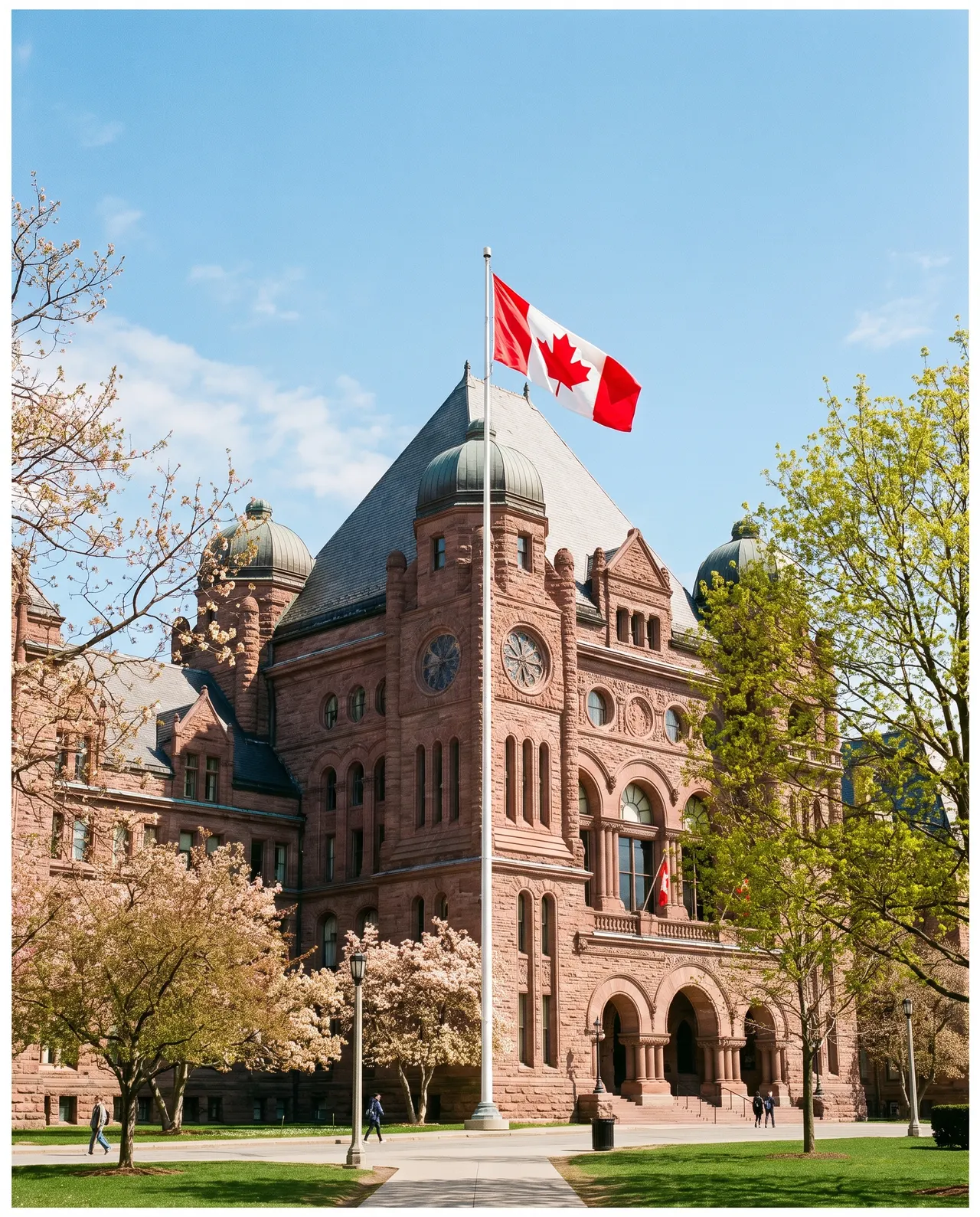
Adult applicants must have been physically present in Canada for at least 1,095 days (three years) in the five years before the date they sign the application. Each day you spent in Canada as a temporary resident or protected person before becoming a permanent resident counts as half a day, up to a maximum credit of 365 days. IRCC’s citizenship eligibility page sets out the rules and links to its physical presence calculator.
You must also have filed income taxes in Canada for at least three years within the five-year period, if you were required to. Applicants aged 18 to 54 when they sign must show English or French at Canadian Language Benchmark level 4 in speaking and listening, and pass the citizenship test. Certain criminal charges, convictions and prohibitions can make you ineligible for a time.
We reconcile your travel history against your passport stamps and entry and exit records, confirm your tax filings and language evidence, and look for anything in your history that needs to be explained before you sign. If you are counting close to the minimum, it’s usually safer to wait a few weeks than to apply with a narrow margin.
Once you’re settled, it’s also a good time to put an Ontario will naming a guardian for your children in place.
Visiting and studying
Temporary applications are decided on a short file, so what’s in it matters.

Citizens of many countries need a temporary resident visa to visit Canada; visa-exempt travellers flying in usually need an electronic travel authorization instead. For a visitor visa, the officer must be satisfied that you will leave at the end of your stay. The application should show the purpose of the trip, enough money for it, and your ties to home: work, family, property and travel history. An invitation letter from family in Canada helps but doesn’t replace that evidence.
A study permit needs a letter of acceptance from a designated learning institution, proof you can pay tuition and living costs, and in most cases a provincial or territorial attestation letter. Some students don’t need an attestation letter, including primary and secondary school students and, since January 1, 2026, students in master’s or doctoral degree programs at a public designated learning institution. A clear study plan that explains why the program makes sense for you is often the difference between a strong and a weak application.
A refusal stays on your record and every later officer can see it. Before reapplying, we read the refusal reasons and, where useful, the officer’s notes, and fix what the officer found missing rather than resubmitting the same file.
Exceptions and inadmissibility
When you don’t fit a program, or something in your past makes you inadmissible, the law leaves some room for discretion.

Section 25 of the Immigration and Refugee Protection Act lets IRCC grant permanent residence, or an exemption from a requirement, where humanitarian and compassionate considerations justify it. Officers weigh your establishment in Canada, the best interests of any children directly affected, family ties, health, and the hardship you would face if you had to leave. Only one H&C application can be under consideration at a time. You generally can’t apply while a refugee claim is pending, or within 12 months after a claim was rejected or abandoned, subject to limited exceptions. The cost and inconvenience of applying from abroad is not enough on its own. Our H&C applications page explains how the evidence is built.
If you are inadmissible, for example because of a criminal conviction, a temporary resident permit may still let you enter or stay in Canada for a specific period where your reason for being here outweighs the risk. It’s discretionary and needs a well-documented reason.
A conviction outside Canada can make you inadmissible even if it was minor or long ago. Depending on the offence and how long ago the sentence ended, you may be deemed rehabilitated after enough time has passed, or you may be able to apply for individual rehabilitation once at least five years have passed since you completed your sentence. Impaired driving is now treated as serious criminality in Canada, which changes the options for many travellers. Tell us about any charge or conviction at the first call, even one you think doesn’t matter.
Refugee protection
A claim can be made at a port of entry or from inside Canada. Before a claim goes to a hearing at the Immigration and Refugee Board, the government decides whether it is eligible to be referred. Under changes that became law in March 2026 and apply to claims made on or after June 3, 2025, a claim is not referred to the Board if it is made more than one year after the person’s first entry into Canada after June 24, 2020, or, for people who crossed the Canada–US land border between official ports of entry, more than 14 days after entering. Unaccompanied minors are exempt. People whose claims are ineligible may still have access to a pre-removal risk assessment. Timing therefore matters more than it used to: if you are thinking about a claim, speak to a lawyer early.
Five or more Canadian citizens or permanent residents can come together to sponsor a refugee living abroad, committing to support them for their first year. The person sponsored must already be recognised as a refugee by the United Nations refugee agency or a foreign state. As of September 2026, IRCC has paused new private sponsorship applications, and groups of five can only sponsor through the Blended Visa Office-Referred program for now.
If an application was refused because of an obvious error, such as a document that was on file but overlooked, you can ask the office to reconsider. It is discretionary and IRCC doesn’t have to reopen the file. A reconsideration request also doesn’t pause the deadline to ask the Federal Court for judicial review, which under the Act is 15 days for a decision made in Canada and 60 days for one made outside Canada. Contact us as soon as a refusal arrives so both options can be weighed in time.
Avoiding refusals
Many refusals trace back to how the application was put together. These are the problems we look for before anything is submitted.
A missing form, signature, fee or required document can get an application returned without being assessed, sometimes after months of waiting. We work from a document list for your specific program, not a generic checklist.
Immigration officers can see your previous visa, study, work and sponsorship applications. Dates of travel, addresses, jobs and family details that don’t match what you said before raise questions, even when the difference is an honest mistake.
Under section 40 of the Immigration and Refugee Protection Act, misrepresenting or withholding a material fact, directly or indirectly, makes you inadmissible, and the bar lasts five years. It can apply to an honest mistake and to something a representative wrote for you. Disclosing a past refusal, a criminal charge or a previous relationship properly matters more than presenting a perfect picture.
For a spousal sponsorship, evidence that the relationship is genuine; for a visitor visa, proof of funds and ties to home; for an H&C application, documented establishment and hardship. We organise the evidence around what the officer has to decide.
Only lawyers and paralegals who are members of a Canadian law society, Québec notaries, and consultants licensed by the College of Immigration and Citizenship Consultants can charge a fee to advise or represent you; IRCC explains this on its page about authorized representatives. An unauthorized representative can get your application returned or refused. Rosalie Wannes is an Ontario lawyer licensed by the Law Society of Ontario.
Fees

Immigration fees depend on the program and on how much preparation your application needs, so they’re quoted after we understand your case. The quote form lets you choose the application type and tell us your timeline. Government processing fees are separate and set by IRCC, and processing times change often; IRCC publishes current processing times for each application type.
Questions

Yes. Our office is at 3319 Sheppard Ave E, Suite 103, in Toronto. Consultations are by phone, so you can speak with the lawyer wherever you live in Toronto or the GTA, in English, Armenian or Arabic.
We recommend a profile analysis. The lawyer assesses the pathways open to you and how to strengthen your profile, and after you receive the report you get a complimentary 30-minute consultation. Choosing the right program first helps you avoid refusals and wasted application fees.
As of September 2026, IRCC has paused the Parents and Grandparents Program and is not accepting new interest to sponsor forms. A super visa, which lets parents and grandparents stay for up to five years at a time, is often the practical alternative while the program is paused.
At least 1,095 days of physical presence in the five years before you sign the application. Days spent in Canada as a temporary resident or protected person before you became a permanent resident count as half days, up to 365 days.
Generally yes, if IRCC received your application before your permit expired and you stay in Canada. You keep working on the same conditions until a decision is made.
You may be able to apply to restore your status within 90 days of losing it. You can’t work or study while that application is pending, so contact us as soon as you realise.
Not for your score. Since March 25, 2025, a job offer no longer adds points under the Comprehensive Ranking System. A job offer can still matter for eligibility in some programs, and for provincial nomination.
Giving false information or leaving out a material fact in an immigration application, even by mistake. A finding of misrepresentation makes you inadmissible for five years, so past refusals, charges and relationships need to be disclosed properly.
Yes. We recommend providing six months of banking transactions, together with proof of any assets.
For a Group of Five sponsorship, yes: the person must already be recognised as a refugee by the United Nations refugee agency or a foreign state. It is not required when sponsorship is through a Sponsorship Agreement Holder. As of September 2026, new Group of Five applications are paused except through the Blended Visa Office-Referred program.
Guides
Family sponsorship is a pathway that allows Canadian citizens and permanent residents to sponsor their family members to immigrate to Canada.

As a Canadian immigration lawyer, I often get asked about the best ways for skilled workers to immigrate to Canada. One of the most…
Areas We Serve
Consultations are by phone, so you can speak with the lawyer from anywhere in the GTA, or meet at our office on Sheppard Ave E in Toronto.

Immigration lawyer for Scarborough clients. Our office is on Sheppard Ave E.
Immigration lawyer for North York clients.

Immigration lawyer for Markham clients.

Here to help
Book a free 15-minute call, or tell us about your application in the quote form.
Prefer to talk now? Call (647) 707-7718 · Service in English, Armenian and Arabic