

A real estate lawyer in Ontario reviews your agreement, searches title, verifies the lawyer acting for the seller, handles your mortgage funds, registers the transfer that makes you the legal owner, and reports to you afterwards. Only a licensed lawyer can complete that registration, which is why the role is not optional.
Most buyers know they need a real estate lawyer. Far fewer know what actually happens in the eight weeks between signing and getting the keys. Here is the whole process, step by step.
Updated October 2026 with the first-time buyer rebate amounts, the Non-Resident Speculation Tax position, and what happens when a closing is delayed.
At a glance
- Before you sign: review of the draft Agreement of Purchase and Sale, identity verification and anti-money-laundering checks.
- Due diligence: title search, title insurance, and confirmation that the lawyer on the other side is licensed and insured to act.
- Money: mortgage instructions, requisition of funds from your lender, and preparation of the cheques and wires that pay everyone on closing.
- The numbers: the seller’s lawyer prepares the statement of adjustments; your lawyer reviews it. Your trust ledger shows what you personally owe.
- Closing day: registration must complete before the Land Registry Office closes at 5:00 p.m. Standard OREA and TRREB agreements give the seller until 6:00 p.m. to vacate.
- After closing: reporting letter, notification of the municipality and any condominium management, and payout of mortgages, taxes and commissions.
The timeline, week by week
A typical Ontario purchase runs 30 to 90 days from firm deal to closing, and your real estate lawyer is working through most of it. Here is what happens when.
| When | What happens | Who does it |
|---|---|---|
| Before you sign | Draft agreement reviewed, terms flagged | Your lawyer |
| Day 1 to 3 after firm | Signed agreement received, file opened, ID and anti-money-laundering checks | Your lawyer |
| Week 1 to 2 | Title search, writ search, opposing counsel verified | Your lawyer |
| Week 2 to 3 | Requisition letter sent, raising anything on title that needs fixing | Your lawyer |
| Week 3 to 4 | Mortgage instructions received, lender conditions satisfied | Your lawyer and lender |
| Week 5 to 6 | Title insurance arranged, closing documents prepared | Both lawyers |
| 3 to 5 days before | Statement of adjustments delivered and reviewed, trust ledger sent to you | Seller’s lawyer, then yours |
| 1 to 2 days before | Your closing funds transferred to your lawyer’s trust account | You |
| Closing morning | Sub search and writ search repeated, mortgage funds requisitioned | Your lawyer |
| Closing, before 5:00 p.m. | Funds released, transfer and mortgage registered | Your lawyer |
| Closing, by 6:00 p.m. | Seller vacates, lockbox code released | Seller |
| 2 to 6 weeks after | Reporting letter, municipal and condominium notifications, payouts | Your lawyer |
The two moments that most often go wrong are the funds arriving late and something new appearing on title at the last minute. Both sit in that final 48 hours.
Before you even sign the agreement
Your lawyer can review a draft Agreement of Purchase and Sale before you sign it. Most buyers sign first and call a lawyer afterwards. If something in the agreement is wrong, fixing it before signing is far easier and cheaper.
This is where most people miss an opportunity.
A lawyer can read the draft before you sign, which matters most when the property has complications: a tenant in place, a right of way, an older septic system, a pre-construction purchase with builder-specific terms, or anything else affecting how the property can be used or transferred.
Nothing is wrong with signing first on a straightforward transaction. But if a term is off, fixing it beforehand costs almost nothing. Fixing it afterwards can be difficult or impossible. Involving your lawyer early is the cheapest protection in the whole process.
Who does what: your real estate lawyer and the seller’s
Buyers often assume both real estate lawyers do the same work. They do not.
| Task | Buyer’s lawyer | Seller’s lawyer |
|---|---|---|
| Title search | Carries it out | Responds to requisitions |
| Statement of adjustments | Reviews it | Prepares it |
| Title insurance | Arranges it | Not involved |
| Mortgage registration | Registers the new mortgage | Discharges the old one |
| Transfer registration | Registers the transfer | Signs and releases it |
| Land transfer tax | Calculates and remits it | Not involved |
| Commission payouts | Not involved | Pays from proceeds |
Identity verification and anti-money-laundering checks
Every client has to be identified and verified. The Law Society of Ontario requires lawyers to verify client identity and carry out anti-money-laundering checks on transactions involving the receipt or transfer of funds.
Clients notice this part as paperwork and rarely as protection.
Real estate is a recognised route for laundering money, and lawyers moving large sums through trust accounts sit directly in that path. These obligations protect the integrity of the transaction and, ultimately, buyers who might otherwise find themselves inside a deal built for reasons that have nothing to do with property.
Expect to provide government identification and, in some circumstances, an explanation of where your funds came from. It is routine and it applies to everyone.
Reviewing the Agreement of Purchase and Sale
Once the deal is firm, your lawyer receives the signed agreement. This is a binding contract and the foundation of everything that follows.
Your lawyer reads it in detail, covering the conditions, inclusions and exclusions, closing date, deposit structure and any negotiated provisions, and flags anything needing attention before closing.
Common problems at this stage: chattels listed in the agreement that may have been removed, closing conditions nobody properly satisfied, or extra clauses the seller’s lawyer added that need a response.
Checking the lawyer on the other side
Your lawyer checks that the lawyer acting for the seller holds a licence to practise in Ontario, carries proper insurance for real estate work, and has no regulatory history that could put your transaction at risk.
Almost no buyer knows this happens, and it can matter enormously. Your closing funds pass through the other lawyer’s trust account.
So opposing counsel gets looked up. Do they hold a licence in good standing with the Law Society of Ontario? Do they carry the professional liability coverage that real estate practice requires in Ontario? Does any disciplinary or regulatory history give pause? Findings of that kind sit on the public record, and they are worth knowing before hundreds of thousands of dollars move.
Anything that looks wrong becomes a flag raised early, rather than a discovery on closing day with funds already in flight.
Conducting the title search
A title search investigates the property’s legal history through Ontario’s land registration system. It confirms who owns the property and reveals mortgages, liens, easements, work orders and other encumbrances that stay invisible during a showing.
This is among the most important things a real estate lawyer does, and among the least visible to buyers.
The search confirms who legally owns the property, what mortgages or liens sit registered against it, whether easements or rights of way exist, whether outstanding work orders or zoning violations remain, and any other encumbrance affecting your ownership.
A property can look perfect and still carry a lien from an unpaid contractor, an undisclosed mortgage, or an easement letting a neighbour cross part of the land. None of that appears at a viewing. All of it appears in the title search.
Title insurance
Almost all lenders require title insurance, and a prudent lawyer would not close a purchase without it. It covers problems that existed before you bought but stayed undiscoverable in the title search: fraud, survey errors, encroachments and pre-existing violations.
Title insurance protects you against problems predating your ownership that the search could not catch. Title fraud, survey errors, zoning violations from before your time, encroachments onto neighbouring land.
You pay a one-time premium at closing and the cover lasts as long as you own the property.
Your lender will almost certainly require a policy covering their interest. An owner’s policy covering yours is separate, and given how much it covers relative to the premium, it is not a place to economise.
First-time buyers: the rebates you can claim
First-time buyers in Ontario can claim up to $4,000 back on provincial land transfer tax. Buying in Toronto adds a municipal rebate of up to $4,475, so a first-time buyer in the city can recover up to $8,475 in total.
Your lawyer claims these at registration, so the money comes off what you owe on closing rather than arriving as a refund months later. You need to tell them you are a first-time buyer, and they will confirm you qualify.
| Rebate | Maximum | Full rebate up to |
|---|---|---|
| Ontario land transfer tax | $4,000 | $368,333 |
| Toronto municipal land transfer tax | $4,475 | $400,000 |
Buying with someone who has owned a home before reduces the rebate proportionally. Raise it with your lawyer early, because it changes the figure on your trust ledger.
If you are not a Canadian citizen or permanent resident
Ontario charges a 25% Non-Resident Speculation Tax on residential purchases by foreign nationals, foreign corporations and taxable trustees, anywhere in the province, on top of regular land transfer tax. Separately, the federal prohibition on non-Canadians purchasing residential property is currently set to expire on 1 January 2027.
Two separate rules often get confused, so it helps to separate them.
The Non-Resident Speculation Tax has applied province-wide at 25% since 25 October 2022. It covers land containing one to six single-family residences, and since 27 March 2024 it also covers condominium parking and storage units. Where any one buyer is a foreign entity, the tax applies to the full purchase price rather than to that person’s share alone.
Canadian citizens, permanent residents and First Nations individuals registered under the Indian Act fall outside it. Exemptions also cover nominees, protected persons, and the spouse of a citizen, permanent resident, nominee or protected person. A rebate may be available where the buyer becomes a permanent resident within four years of registration, which is worth planning for rather than discovering later.
The federal prohibition is a different thing entirely. It bars certain non-Canadians from purchasing residential property at all, with exceptions for permanent residents, many work permit holders and some students. It expires on 1 January 2027 as things stand, though governments have extended it before.
Worth being clear about one thing: when that prohibition ends, the 25% speculation tax carries on. The two rules are unrelated, and only one of them has an end date.
Dealing with your mortgage lender
Your lawyer receives the mortgage instructions, satisfies the lender’s conditions, requisitions the mortgage funds so they arrive in time, registers the mortgage on title, and prepares the cheques and wire transfers that pay everyone who must be paid.
If you are financing the purchase, your lawyer sits between you and your lender. They receive the mortgage instructions, review the documents with you, and confirm every condition before funds move. They also register the mortgage on title for the lender.
This involves more than it sounds. Lenders set specific requirements about how the transaction must be structured, and any gap between the mortgage instructions and the actual purchase terms has to be resolved before they advance anything.
There is a mechanical side that demands precise timing. Your lawyer requisitions funds so they land in the trust account on time, then prepares the cheques and wires that pay out on closing, to the seller’s lawyer and to anyone else the proceeds must pay. Funds arriving late put the closing at risk, which is why this runs on a schedule rather than on the day.
The statement of adjustments
On a purchase, the seller’s lawyer prepares the statement of adjustments. Your lawyer reviews it, checking that property taxes and, for a condominium, common element fees have been adjusted correctly. It sets out the balance due to the seller on closing, after deposits.
The statement of adjustments is the accounting between buyer and seller. The seller’s lawyer prepares it, and your lawyer reviews it carefully, because an error costs you money.
Adjustments are the part buyers rarely anticipate. Property taxes get apportioned as of the closing date. If the seller prepaid beyond closing, you reimburse them for that period. If they underpaid, you receive a credit. Condominium common element fees work the same way, as do prepaid utilities. Once deposits come off, the statement shows the balance the seller receives on closing.
Your trust ledger: what you actually owe
The trust ledger breaks down what you owe on closing day: the purchase price, your deposit, the mortgage proceeds, the adjustments, legal fees, title insurance, land transfer tax, and any commissions payable to a mortgage broker or real estate brokerage.
If you want one document answering “what do I actually need to bring to closing”, this is it.
Where the statement of adjustments handles the position between buyer and seller, the trust ledger is your own accounting. It starts from the purchase price, credits your deposit and the mortgage proceeds, applies the adjustments, then adds the costs payable through your lawyer: legal fees and disbursements, land transfer tax, and any brokerage or mortgage broker commission coming out of the transaction.
Your lawyer should walk you through it before closing, so nothing about the number or the deadline surprises you.
Closing day: what actually happens
Registration has to complete before the Land Registry Office closes at 5:00 p.m., after which no further registrations happen that day. Standard OREA and TRREB agreements give the seller until 6:00 p.m. to vacate. In most cases you receive lockbox codes rather than keys handed over directly.
Closing day is when ownership transfers, and from your real estate lawyer’s side it is the busiest day of the transaction.
Your lawyer receives the mortgage funds, combines them with your closing funds, and sends the balance to the seller’s lawyer. In exchange they receive the transfer documents and access to the property. Once funds clear, they register the transfer of title in your name through Ontario’s electronic land registration system, and register your mortgage. That registration is what legally makes you the owner.
One more search, on closing day itself
The title search described earlier is not the last check. On closing day, before funds move, your lawyer runs two further searches to confirm nothing changed in the gap.
A writ search repeats the check against the seller, confirming nobody has registered a writ against them in the meantime. A writ is a debt from an unpaid civil judgment that can attach to a property as a lien.
A sub search runs against the title itself, covering only the period since the original search, confirming no new registration has appeared. A second mortgage, a lien, any other encumbrance.
Both safeguard the window between the first search and the moment title actually transfers to you.
The 5:00 p.m. deadline
Everything has to complete before the Land Registry Office closes at 5:00 p.m. Once it closes, no further registrations happen that day, so a deal that has not registered does not close.
This is why lawyers push hard on timing and why delayed funds matter so much. Documents have to change hands, funds have to move, and registration has to happen, in the right order and inside the business day.
Keys, lockboxes, and the 6:00 p.m. rule
Two practical points catch buyers out on moving day.
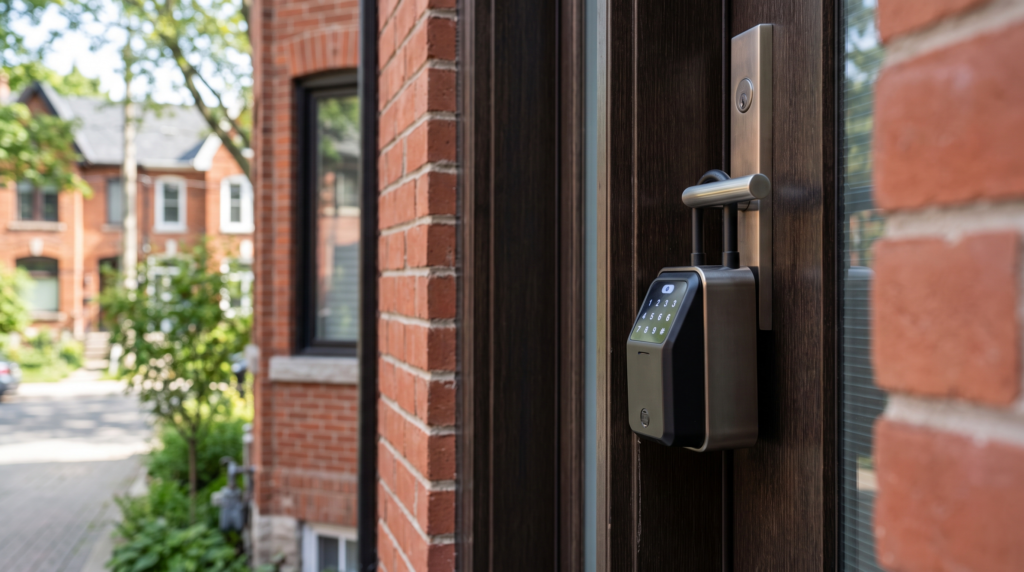
First, you will most likely receive lockbox codes rather than keys handed over directly. The code opens a lockbox at the property, and the physical keys sit inside it. The practice began during COVID-19 and simply stayed.
Second, and more important if you are moving on closing day: the standard OREA and TRREB agreements provide for vacant possession by 6:00 p.m. So even where the deal closed and title registered in the afternoon, the seller may remain until 6:00 p.m. After that, staying becomes trespassing. If you have booked movers for the morning, understand that gap before you book.
What happens if closing is delayed
A buyer who cannot close on the agreed date is in breach of contract. The seller can extend, or treat the agreement as terminated and keep the deposit, and can pursue the buyer for further losses if they resell for less. Most delays get resolved by agreement, but nothing obliges a seller to agree.
Closings slip for all sorts of reasons. Mortgage funds arrive late. A lender withdraws approval after a last-minute credit check. A lien appears on the sub search. The seller has not moved out.
What happens next depends on who caused it.
If the delay is short and both sides agree, the lawyers sign an amendment extending the closing date. This happens often and usually costs little beyond some additional legal time and perhaps a per diem to compensate the other side.
If the buyer cannot close at all, the position gets serious. The deposit is at risk. Beyond that, if the seller resells for less than your price, they can pursue you for the shortfall plus carrying costs and expenses. In a falling market that difference can run well past the deposit.
If the seller cannot close, the buyer has remedies too, including suing for damages or, in some circumstances, for specific performance to force the sale through.
Tell your lawyer the moment you suspect a problem. A delay flagged three days out usually gets solved. The same delay discovered at 4:00 p.m. on closing day usually does not.
After closing
Your lawyer sends a reporting letter, notifies the municipal tax department of the change of ownership and, for a condominium, the property manager, then completes the payouts the transaction requires.
Once closing completes, your lawyer sends you a reporting letter. It confirms title now sits in your name, encloses the title insurance policy, the final statement of adjustments, and the other documents relevant to your ownership.
Keep it. It records how you came to own the property, and you will want it if you sell, refinance, or need to resolve a title question later.
Administrative work continues after the day itself. Your lawyer notifies the local tax department so property tax bills reach the right person, and for a condominium notifies the property manager so common element fees and the owner record get updated.
Then the payouts. On a purchase, funds go where the transaction requires. On a sale they get more involved: discharging and paying out existing mortgages, settling outstanding property taxes, and paying brokerage and mortgage broker commissions from the proceeds. Handling those correctly, and obtaining the discharges that prove it, forms part of the closing rather than an afterthought.
Refinances, renewals and transfers
A refinance or a switch to a new lender needs a lawyer, because registering the new mortgage and discharging the old one both happen through the land registration system. Renewing with your existing lender on the same terms usually does not.
Not every job for a real estate lawyer is a purchase, and the distinction trips people up.
Renewing with your current lender on the same terms needs no lawyer. You sign the renewal, the existing mortgage stays on title, and nothing registers.
Switching lenders, or refinancing to borrow more, does need one. The new lender registers a new mortgage, the old one gets discharged, and only a lawyer can do either. The work resembles a purchase without the purchase: title search, lender instructions, registration, payout of the old mortgage.
Transfers of title between family members, after a separation, or into or out of a trust follow their own rules, and carry tax consequences that often surprise people. Our guide to adding or removing someone from a property title covers that ground.
What can go wrong without proper legal representation
Real estate transactions in Ontario carry genuine legal complexity. Title defects, undisclosed liens, improperly discharged mortgages and title fraud are real risks, and they happen.
Transfers of title in Ontario register electronically through the province’s land registration system, and only licensed lawyers hold access to it. A lawyer is not an optional participant.
A title defect discovered after closing can prove extraordinarily difficult and expensive to resolve without the right protection already in place.
Beyond a standard purchase
Wannes Law acts on residential and commercial transactions, cottage and lakefront purchases, survivorship applications, life leases, sales under a power of attorney, and estate sales and power of sale transactions. If it concerns real estate, we handle it.
Where a property passes after a death rather than a sale, our guide to transferring a property after someone dies in Ontario explains the survivorship and transmission routes.
Working with a real estate lawyer at Wannes Law
Meet the lawyers and legal team at Wannes Law. Our real estate services cover residential purchases, sales, refinances and transfers across Toronto and the GTA, alongside the commercial and estate work above, with service in English, Armenian and Arabic.
We also offer a flat-fee status certificate review for condominium buyers, and if you close your purchase with us, that review is complimentary.
If you are buying a home in Ontario and want to know what to expect and what it will cost, get an instant quote online. No phone tag, no waiting. For a full walkthrough of that number, see our guide to real estate lawyer fees in Ontario and what sits inside the disbursements.
Common questions
These cover the purchase process specifically. For broader questions see our full FAQ, or read what past clients say on our testimonials page.
Do I need a lawyer to buy a house in Ontario?
Yes. Transfers of title register through Ontario’s electronic land registration system, and only licensed lawyers hold access, so a lawyer has to complete the registration that makes you the legal owner.
How long does a real estate closing take in Ontario?
Typically 30 to 90 days from a firm deal to closing. Title searching runs in the first two weeks, mortgage instructions arrive around weeks three to four, and the final searches and funds movement happen in the last 48 hours.
What happens if I cannot close on the agreed date?
You are in breach of contract. The seller can agree an extension, which happens often, or treat the agreement as terminated and keep your deposit. If they resell for less, they can pursue you for the shortfall and carrying costs. Tell your lawyer as soon as you suspect a problem.
What is the first-time home buyer land transfer tax rebate in Ontario?
Up to $4,000 on provincial land transfer tax, with a full rebate on homes up to $368,333. Buying in Toronto adds a municipal rebate of up to $4,475, full up to $400,000. Your lawyer claims both at registration, so the amount comes off your closing costs rather than arriving later.
Do I pay the Non-Resident Speculation Tax?
Only if you are a foreign national, a foreign corporation or a taxable trustee. The rate is 25% across Ontario on residential property. Canadian citizens, permanent residents and registered First Nations individuals are outside it, and exemptions cover nominees, protected persons and certain spouses. A rebate may apply if you become a permanent resident within four years.
Do I need a lawyer to refinance or renew my mortgage?
You need one to refinance or switch lenders, because the new mortgage has to be registered and the old one discharged. Renewing with your existing lender on the same terms generally does not require a lawyer.
Who prepares the statement of adjustments?
On a purchase, the seller’s lawyer prepares it. The buyer’s lawyer reviews it and checks that property taxes and, for a condominium, common element fees have been adjusted correctly.
What is the difference between the statement of adjustments and the trust ledger?
The statement of adjustments is the accounting between buyer and seller. The trust ledger is your own accounting: purchase price, deposit, mortgage proceeds, adjustments, legal fees, title insurance, land transfer tax and any commissions, ending in the amount you personally owe on closing.
What time does a house purchase close in Ontario?
Registration must complete before the Land Registry Office closes at 5:00 p.m. After that no further registrations happen that day.
When do I get the keys on closing day?
Usually you receive lockbox codes rather than keys handed over directly. The code opens a lockbox at the property holding the actual keys, a practice that began during COVID-19 and remained. Standard OREA and TRREB agreements allow the seller until 6:00 p.m. to vacate, so access may not follow registration immediately.
Can I move in on the morning of my closing date?
It is risky. The deal has to register before 5:00 p.m., and the seller may generally remain until 6:00 p.m. under the standard agreement. Book your movers with that in mind.
Does my lawyer check the title again right before closing?
Yes. On closing day, before funds move, a writ search repeats against the seller and a sub search runs against the title, confirming nothing new has registered since the original search. It safeguards the gap between that search and the moment title transfers.
Is title insurance mandatory in Ontario?
No statute mandates it, but almost all lenders require it and a prudent lawyer would not close a purchase without it. An owner’s policy covering your own interest is separate from the lender’s and worth having.
Can my lawyer review the agreement before I sign it?
Yes, and it is the cheapest protection in the process. Fixing a problem before signing is far easier than fixing it afterwards.
Why does my lawyer need my ID and proof of where my funds came from?
The Law Society of Ontario requires lawyers to verify client identity and complete anti-money-laundering checks on transactions involving the movement of funds. It applies to every client.
This article is general information about residential real estate transactions in Ontario and is not legal advice. Procedures, statutory requirements, tax rates and fees change, and the terms of your own Agreement of Purchase and Sale govern your transaction. The 6:00 p.m. possession time reflects the standard OREA and TRREB forms and may be varied by agreement. The federal prohibition on purchases by non-Canadians has been extended before and its expiry date may change again. Confirm the details of your purchase with your lawyer.
Sources: Calculating Land Transfer Tax, Government of Ontario · Non-Resident Speculation Tax, Government of Ontario · Law Society of Ontario