


What to Do When Someone Dies in Ontario, and Whether You Need Probate
When someone dies in Ontario, a process starts almost immediately, and most people have never seen it before. There is no reason you would…
Services in English, Armenian and Arabic
Toronto court, Toronto rules
North York is part of the City of Toronto, so the application goes to the Superior Court of Justice in Toronto, whichever neighbourhood the person lived in, from Willowdale to Downsview.
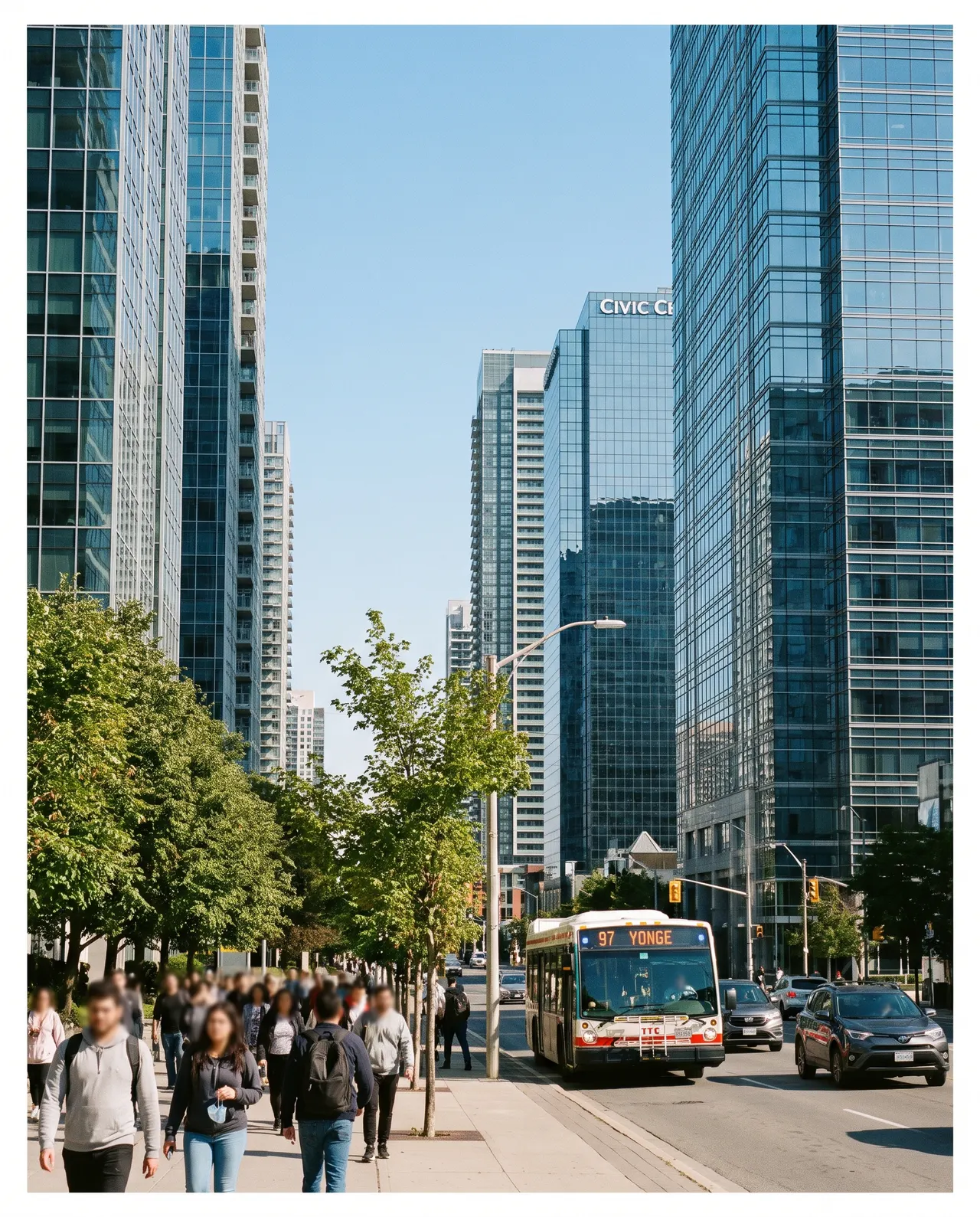
The Toronto estates office is at the 330 University Avenue courthouse, 9th floor. Ontario accepts probate applications by email, so the application and affidavits don’t have to be carried downtown; the original will and the estate administration tax payment are still delivered to the court office on paper, which we arrange.
Two Toronto features matter more for North York estates than most. First, the size of the estate: where the family home has appreciated for decades, the estate administration tax and the capital gains questions are larger, and so are the stakes if the estate trustee makes a mistake. Second, how disagreements are handled: in Toronto, contested estate proceedings go to the court’s Estates List, and many are referred to mandatory mediation before a judge decides anything. That process is slow and costly, so the way the estate trustee communicates with beneficiaries from the start matters.
For the general rules on when probate is needed, the forms and the timeline, see our probate and estate administration page. The sections below deal with what North York estate trustees most often face.
Condos
Many North York residents own a condo around Yonge and Sheppard or Bayview Village, as a home or an investment. A condo in the estate brings its own tasks, and the Vacant Home Tax is the one most often missed.

Why Wannes Law
Rosalie Wannes, licensed by the Law Society of Ontario, is responsible for your file from start to finish.
Instant online quotes and published flat fees, so you know the cost before you retain us.
Plain-language explanations of what happens, what you provide and what we handle, at every stage.
Reach your lawyer and law clerk directly by phone and email while your matter is underway.
Meet at our Sheppard Ave E office in Toronto, or review documents by video and courier the originals.
Talk through your matter in the language you are most comfortable with.
The numbers
Ontario’s tax is flat above the first $50,000, so on a North York estate the figure is driven almost entirely by the house.
Under Ontario’s estate administration tax rules (as of 2026), there is no tax on the first $50,000 and $15 for every $1,000, or part of $1,000, above it. Debts registered against Ontario real estate, such as a mortgage or a registered home equity line of credit, are deducted from that property’s value. Other debts are not.
| Estate | Value counted | Tax |
|---|---|---|
| Bungalow in the deceased’s sole name, $1,700,000, with a $150,000 registered line of credit; a RRIF naming the estate, $220,000; bank, $60,000 | $1,830,000 | $26,700 |
| Condo in sole name, $620,000, no mortgage; bank, $35,000 | $655,000 | $9,075 |
In the first example, the RRIF counts because it names the estate. Had it named a child directly, it would have passed outside the estate and saved $3,300 in estate administration tax, although the income tax on a RRIF is generally still reported on the deceased’s final return. Private company shares need a separate look: where the owner made a secondary will, the shares can often be dealt with without probate. If you are still planning, our North York wills page explains primary and secondary wills.
The estate trustee files an estate information return with the Ministry of Finance listing each asset and its value. On a large estate, get proper appraisals: if a value turns out to be wrong, an amended return and any extra tax are due within 60 days of finding out.
Keeping the peace
Most estate disputes start with silence rather than bad faith. These steps keep a North York estate out of the Estates List wherever that is possible.
Beneficiaries are entitled to notice of the probate application and, where it applies to them, a copy of the will. Sending a short written summary of the assets and the expected timeline at the same time answers most questions before they are asked.
Open an estate account and pay everything through it: the funeral, property tax, condo fees, repairs. Keep every receipt. An estate trustee who uses their own account, or pays themselves back informally, creates the records dispute that later needs a court.
Update beneficiaries when the certificate issues, when the house sells and when the tax returns are filed. If an interim distribution is possible, explain what is being held back and why: usually tax, the CRA clearance certificate and the six-month claim periods.
Before the final distribution, give beneficiaries clear accounts of what came in, what was paid out and any compensation the estate trustee is claiming, and ask them to approve them and sign releases. Most estates close this way.
The estate trustee, or a beneficiary, can ask the court to review the accounts in a passing of accounts. In Toronto that is heard on the Estates List, usually after mandatory mediation. We tell you if it is heading there, and whether you need an estate litigator.
Questions

With the Superior Court of Justice in Toronto, at the estates office on the 9th floor of 330 University Avenue. The application can be emailed; the original will and the tax payment are delivered on paper.
If the house is in the deceased’s sole name with no registered mortgage and nothing else is in the estate, Ontario’s estate administration tax is $29,250 (as of 2026): nothing on the first $50,000, then $15 per $1,000 on the remaining $1,950,000.
The unit still needs an occupancy declaration every year. The City’s exemption for a unit left vacant because the owner died can be claimed for up to three consecutive taxation years with a copy of the death certificate. If no one declares, the unit is deemed vacant and taxed at 3% of its assessed value (as of 2026).
Yes. Ontario law allows a fair and reasonable allowance unless the will sets the amount. It should appear in the accounts and be approved by the beneficiaries or the court.
Find out what they object to first; often it is a missing receipt or an unexplained expense. If it can’t be resolved, the court can review the accounts in a passing of accounts on the Toronto Estates List.
No. Our office is at 3319 Sheppard Ave E, Suite 103, in Toronto. North York estate trustees can meet us there, or work with us by phone, email and video while signing on paper.
Guides
When someone dies in Ontario, a process starts almost immediately, and most people have never seen it before. There is no reason you would…

A status certificate review by a real estate lawyer is one of the most important steps in any condo purchase in Ontario.

A will is a legal document that outlines how a person's assets will be distributed after their death. It's an important part of estate…
Areas We Serve
We act on estates filed in Toronto, Newmarket, Oshawa and Brampton. For other North York services, see our North York page.
Probate & estates for Scarborough clients. Our office is on Sheppard Ave E.
Probate & estates for North York clients.
Probate & estates for Markham clients.

Here to help
Book a free 15-minute call about the estate, or answer the estate questions for a quote.
Prefer to talk now? Call (647) 707-7718 · Service in English, Armenian and Arabic
