

Services
Business legal work for Scarborough owners
For owners in Agincourt, Wexford, L’Amoreaux, Malvern and across Scarborough, served from our office on Sheppard Avenue East. Our business and incorporation page explains each service in depth; this page covers what is particular to running a business here.

-
Incorporation
Ontario or federal incorporation, named or numbered, with the share structure, bylaws, first resolutions and minute book done properly from day one. Also professional corporations and not-for-profits.
-
Shareholder and partnership agreements
Who decides what, how profit is shared, and what happens when an owner wants out, falls ill or dies. Worth signing while everyone still agrees, especially when the owners are relatives or old friends.
-
Minute book catch-up
For companies incorporated online and never organized. We prepare the missing resolutions, registers and share records so they match what really happened, before a bank, buyer or the City asks to see them.
-
Commercial leases
Review of the offer to lease and the lease for a plaza, storefront or office unit, including additional rent, the use clause, personal guarantees and what happens if you sell the business.
-
Contracts
Drafting and reviewing service agreements, employment and independent contractor agreements, and the everyday contracts a growing business signs with suppliers and customers.
-
Wills for business owners
Primary and secondary wills and powers of attorney that cover your shares, so the business can keep running if you can’t and pass on the way you intend.
Starting out
Sole proprietor, partnership or corporation: the short version
Many businesses start small: a contractor with a van, a family restaurant, a tutoring or cleaning service. The legal form you choose decides who is responsible for the business’s debts and how its profit is taxed.
A sole proprietor and the business are the same person, so the owner is personally liable for its debts. Two or more people carrying on business together for profit are generally a partnership, whether or not they signed anything, and each partner can be liable for obligations the others took on. A corporation is a separate legal person that signs its own contracts and owes its own debts, but it comes with directors, resolutions, records and annual filings. The comparison, including Ontario versus federal incorporation, is on our incorporation page.
Names, business numbers and HST
A sole proprietor trading under anything other than their own name, a partnership trading under a name other than the partners’ names, and a corporation using an operating name must register that name through the Ontario Business Registry. Registering a name is not incorporating, and it doesn’t give you exclusive rights to it.
An Ontario or federal corporation gets a business number from the Canada Revenue Agency automatically; an unincorporated business needs one only when it opens a CRA program account, such as GST/HST or payroll (see the CRA’s page on when you need a business number). As of 2026, you must register for GST/HST once taxable sales pass $30,000 in a single calendar quarter or over four consecutive quarters. Your accountant usually opens these accounts; we make sure the corporate records match.
Why Wannes Law
A Toronto law firm that keeps you informed
-
A licensed Ontario lawyer
Rosalie Wannes, licensed by the Law Society of Ontario, is responsible for your file from start to finish.
-
Fees before you commit
Instant online quotes and published flat fees, so you know the cost before you retain us.
-
Every step explained
Plain-language explanations of what happens, what you provide and what we handle, at every stage.
-
Direct access
Reach your lawyer and law clerk directly by phone and email while your matter is underway.
-
Sign in person or remotely
Meet at our Sheppard Ave E office in Toronto, or review documents by video and courier the originals.
-
English, Armenian and Arabic
Talk through your matter in the language you are most comfortable with.
City of Toronto licensing
Does your Scarborough business need a City licence?
Scarborough is part of the City of Toronto, so a business here deals with the City’s Municipal Licensing and Standards division as well as Ontario and the CRA. An Ontario name registration or a certificate of incorporation is not a business licence.

Which businesses are licensed
Toronto licenses particular types of business under Chapter 545 of its Municipal Code, not every business. Many of the types most common on Scarborough’s commercial streets are on the list: restaurants, cafés and take-out counters, hair and nail salons, spas and other personal service settings, auto repair shops and driving schools, among others. A business serving food must also pass a Toronto Public Health inspection before it opens. An office-based business, such as a consultancy or bookkeeping practice, may need no City licence at all. The City’s business licences and regulations table lists the requirements by type of business, including zoning.
Check zoning before you sign a lease
A licence depends on the premises: the zoning has to permit your use at that address. Confirm it before you commit to a lease, or make the lease conditional on it.
Corporations applying for a licence
Since January 1, 2025, a corporation applying for a City licence must file its incorporating documents, a current corporate profile report and an annual return that can require a declaration of who controls the corporation and a list of its shareholders (Municipal Code Chapter 545, section 545-3.1). If your share records were never finished, this is where it shows, so put the minute book in order first. If you are taking over an existing licensed business, don’t assume the seller’s licence comes with it: ask the City what the new owner has to apply for, and build that into the timing of the deal.
Plaza and storefront leases
Leasing a unit in a Scarborough plaza
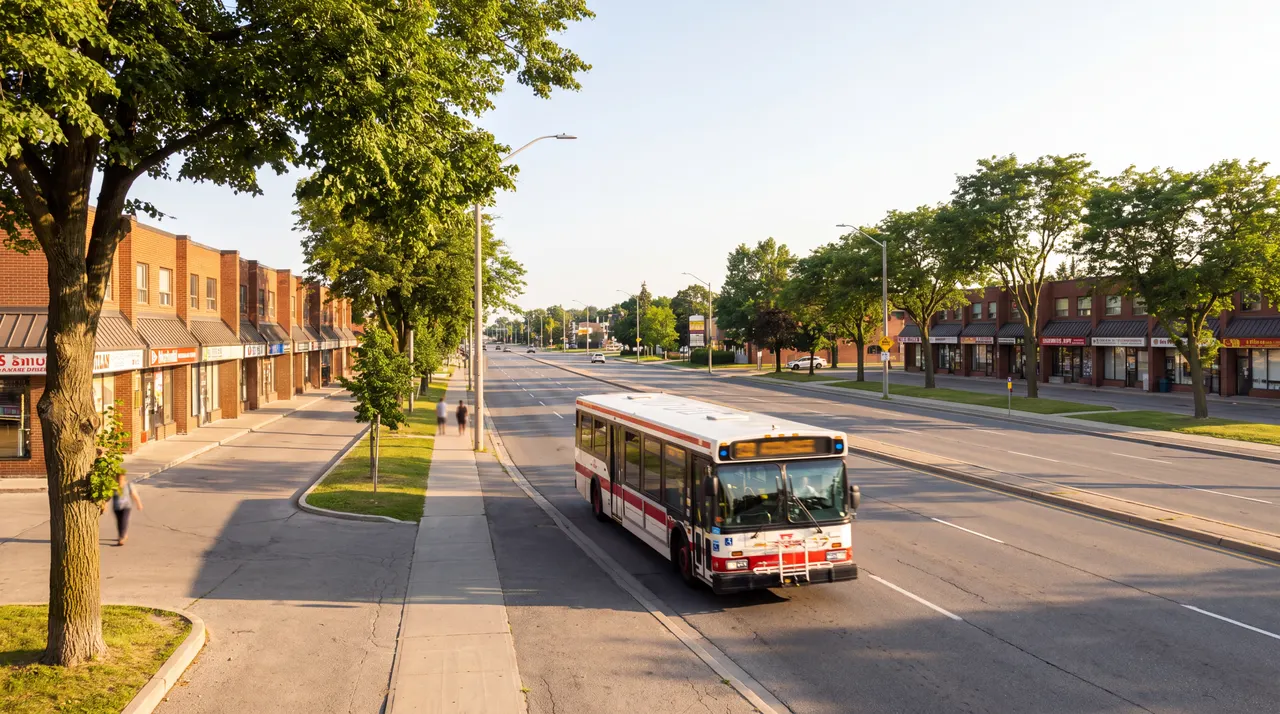
Much of Scarborough’s retail and service space is in strip plazas along roads such as Sheppard, Lawrence, Kennedy and Markham Road. A plaza lease is usually the landlord’s standard form, and the points that matter most are easy to miss.

- Additional rent. Most plaza leases are net leases: on top of base rent you pay a share of the property taxes, insurance and common area maintenance, estimated monthly and reconciled after year-end. Ask for the current estimate and last year’s actual costs before you sign.
- The use clause and exclusives. Your permitted use should describe what you actually plan to sell. Plaza landlords often promise existing tenants the exclusive right to a use, so a clause that seems harmless can stop you adding a product line later.
- Personal guarantees. Even when a corporation is the tenant, the landlord will usually ask the owners to guarantee the lease personally. Negotiate a cap, or a guarantee that ends after a period of on-time payment or when the lease is assigned.
- Selling the business. Check whether you can assign the lease to a buyer, on what conditions, and whether a change in who owns your corporation counts as an assignment.
- Signage, parking and redevelopment. Pylon sign space and parking are rarely guaranteed unless the lease says so. If the landlord can end the lease early to redevelop or relocate you, you want to know before you invest in fixtures.
If the plaza is inside a Business Improvement Area, such as Wexford Heights on Lawrence Avenue East, the Kennedy Road BIA between Lawrence and Highway 401, or Sheppard East Village between Midland Avenue and Markham Road, the City adds a BIA levy to the property’s commercial tax bill, and a net lease usually passes it on to tenants (see the City’s list of BIAs). Our commercial lease review covers each of these points.
Family businesses
Family ownership, succession and the owner’s estate
When the owners are spouses, parents and children, or siblings, the business and the family’s estate planning are the same conversation.

Who holds the shares
Issuing shares to a spouse or adult children can make sense, but dividends paid to family members who don’t work in the business can be caught by the tax on split income. Settle the share structure with your accountant before shares are issued. Where more than one family member owns shares, a shareholder agreement should say how the shares are valued and bought out if someone leaves, and what happens on a divorce, a disability or a death.
If the owner can’t sign
A corporation with one director stalls if that person is suddenly incapable: nobody can sign cheques, renew the lease or vote the shares. A power of attorney for property that covers the shares, and a second director or officer where appropriate, keeps it running.
Passing the business on
In Ontario, a secondary will for private company shares can keep them out of the probate application, which can reduce Estate Administration Tax (nil on the first $50,000 of the estate and $15 per $1,000 above that, as of 2026). It is most effective when the corporation’s articles and share records are in order, because the estate trustees will rely on them. See our Scarborough wills page for how primary and secondary wills are prepared and signed, and our Scarborough probate page if an owner has already died and the family needs to deal with the company.
How it works
From the first call to an organized company

-
Step 1: A free 15-minute call
You pick a time and we call you. Tell us what the business does, who owns it and what prompted the call: a new venture, a partner joining, a lease to sign or records that were never kept.
-
Step 2: Send what you have
For an existing company, the articles and whatever minute book exists; for a lease, the offer to lease or draft lease before you sign it. Seeing the documents lets us quote the actual work.
You provide
- Articles of incorporation and any minute book
- Offer to lease or draft lease, if there is one
- Names of all owners and their intended shares
-
Step 3: Your quote
Business work is quoted individually once we know the structure and scope. Government filing and name search costs are listed separately.
-
Step 4: We do the work
Incorporation filings, the minute book, agreements or lease comments. You can sign at our office on Sheppard Avenue East or review documents with us by phone and email.
We handle
- Filings with the Ontario Business Registry or Corporations Canada
- Bylaws, resolutions and registers
- Agreements and lease comments
-
Step 5: Keep it current
Annual returns, annual resolutions and notices of change when directors or addresses change, so the records are ready when a bank, landlord, buyer or the City asks.
Fees
Quoted individually

Business and corporate work is quoted once we know what you need: a sole owner or several shareholders, a holding company or a professional corporation, a new lease or a minute book catch-up. Government filing and name search costs are separate. Tell us about it in the quote form, or book a free 15-minute call.
Questions
Scarborough business questions
Do I need a City of Toronto business licence in Scarborough?
It depends on the type of business. Toronto licenses particular businesses, including restaurants and take-out, salons and other personal service settings, and auto repair shops; many office-based businesses need none. Check the City’s business regulations table for your type, and confirm the zoning of your premises before you sign a lease.
Where can I get free help with a business plan in Scarborough?
The City of Toronto’s Small Business Enterprise Centre offers free one-to-one consultations and business plan reviews, including in person at the Scarborough Civic Centre, 150 Borough Drive, on set days. Check the City’s page for current times. We handle the legal side: structure, agreements and leases.
Is registering a business name the same as incorporating?
No. Registering a name through the Ontario Business Registry lets you trade under it, but you remain personally responsible for the business. Incorporating creates a separate legal person with its own liability, records and filings.
Should I sign a plaza lease personally or through my corporation?
Usually through the corporation, but most landlords will still ask you to guarantee it personally. The guarantee is often where the real risk sits, so negotiate its limits before you sign.
Our company was incorporated online and has no minute book. Can you fix it?
Yes. We prepare the bylaws, resolutions, share records and registers that should have been done, dated and documented to reflect what actually happened. It is worth doing before you apply for a City licence, borrow, bring in a partner or sell.
Can we meet at your office?
Yes. Wannes Law is at 3319 Sheppard Ave E, Suite 103, Scarborough (Toronto), ON M1T 3K2. Many owners start with the free 15-minute phone call and come in to sign.
Can I work with you in Armenian or Arabic?
Yes. We serve clients in English, Armenian and Arabic.
Areas We Serve
Business law across Toronto and the GTA
From our Scarborough office we act for business owners across Toronto and the GTA, in person or by phone and email.
-
Scarborough
Business lawyer for Scarborough clients. Our office is on Sheppard Ave E.
-

North York
In person on Sheppard Ave E, or fully remote.
-

Markham
Close by in York Region, in person or by video.


Here to help
Set up your Scarborough business properly from the start.
Book a free 15-minute call, or tell us what you need in the quote form.
Prefer to talk now? Call (647) 707-7718 · Service in English, Armenian and Arabic